Varroa destructor
The Varroa destructor is a parasitic mite that is the vector of many viruses, and has been implicated the decline of honey bees. It is particularly lethal because it eats away at the bee's hemolymph, thereby suppressing it's immune system and increasing virus loads (Vanbergen et al., 2013).
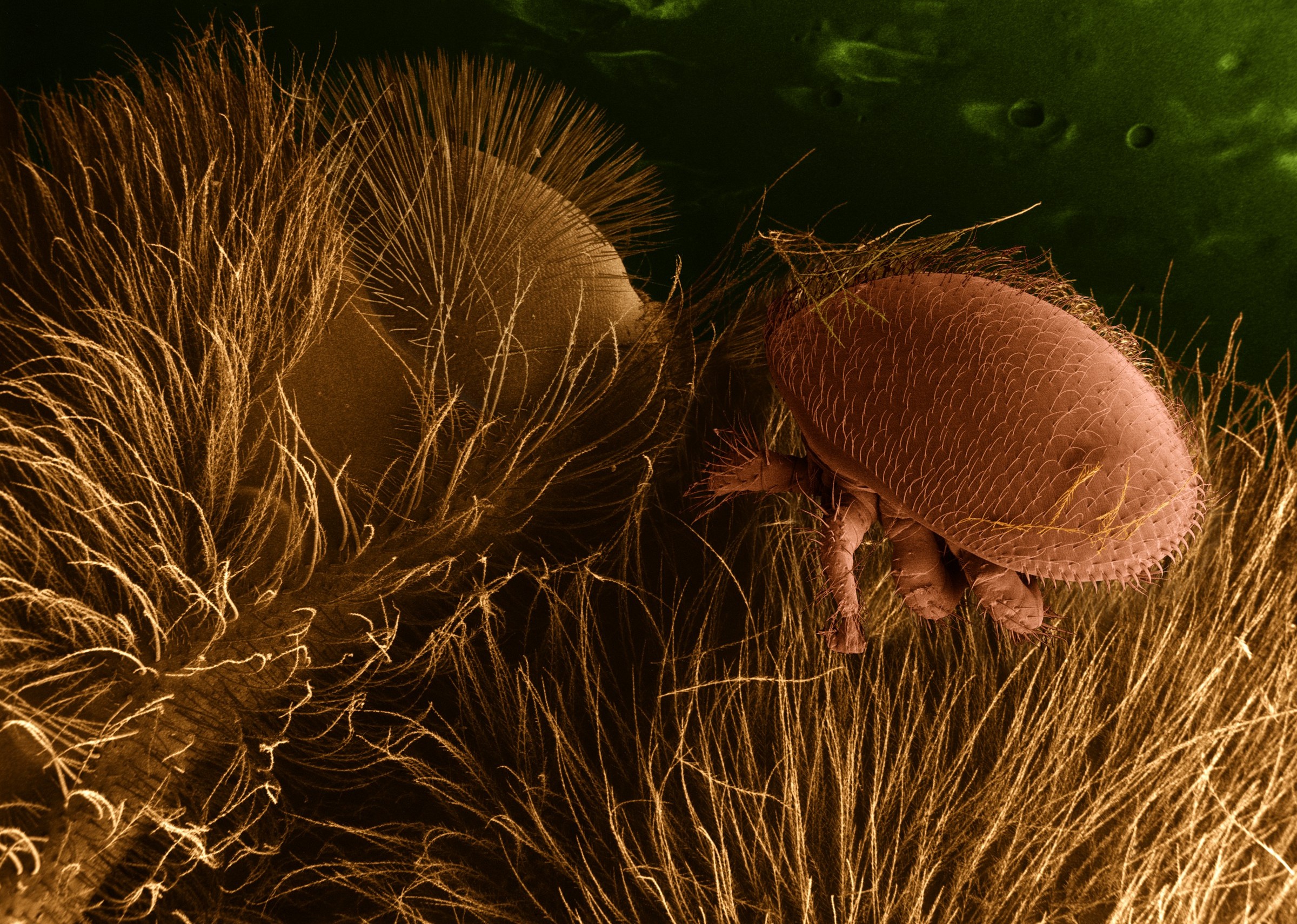 |
| The Varroa mite hang onto the hairs of a bee. Picture credit: Wikipedia |
 |
| A Honeybee with a Destructor mite on its back Photo Credit: forestryimages.org |
Nosema bombi
This is a pathogen that seems to be specific to bumble bees, although other species in the genus have been a major issue for honey bees. It lives in the gut of the bee, taking up resources and generally weakening it further.
 |
| Electron Scanning Microscopy Image of Nosema Photo Credit: zoologie.uni-halle.de |

No comments:
Post a Comment